Showing posts with label Stephen Jannise. Show all posts

Wednesday, February 29, 2012

AFF at the Oscars

There were a lot of proud faces on television screens around the world Sunday night, as the Academy Awards presented their annual prizes to a few lucky filmmakers.  In fact, anyone who played a part in the triumph of an Oscar-winning film had reason to be proud, particularly those involved with the Best Picture winner, “The Artist.” Originally screened at Cannes, this little black-and-white silent French film that initially scared away distributors eventually charmed the world, taking home 5 Oscars by the end of the evening.

The thought of marketing a film like “The Artist” was naturally a concern for all involved, including festivals like AFF.  Even though most of us who programmed the film had seen it at Telluride or Toronto and knew how great it was, convincing everyone else of that fact was a different matter altogether.  Ultimately, we at AFF decided to screen “The Artist” at the Paramount Theatre, Austin’s beautiful classic movie palace, and the experience of seeing that particular film in that particular cinema was truly unparalleled. The film went on to win our Audience Award, and we couldn’t be prouder to have our trophy join the growing number of statues on this wonderful film’s shelf.
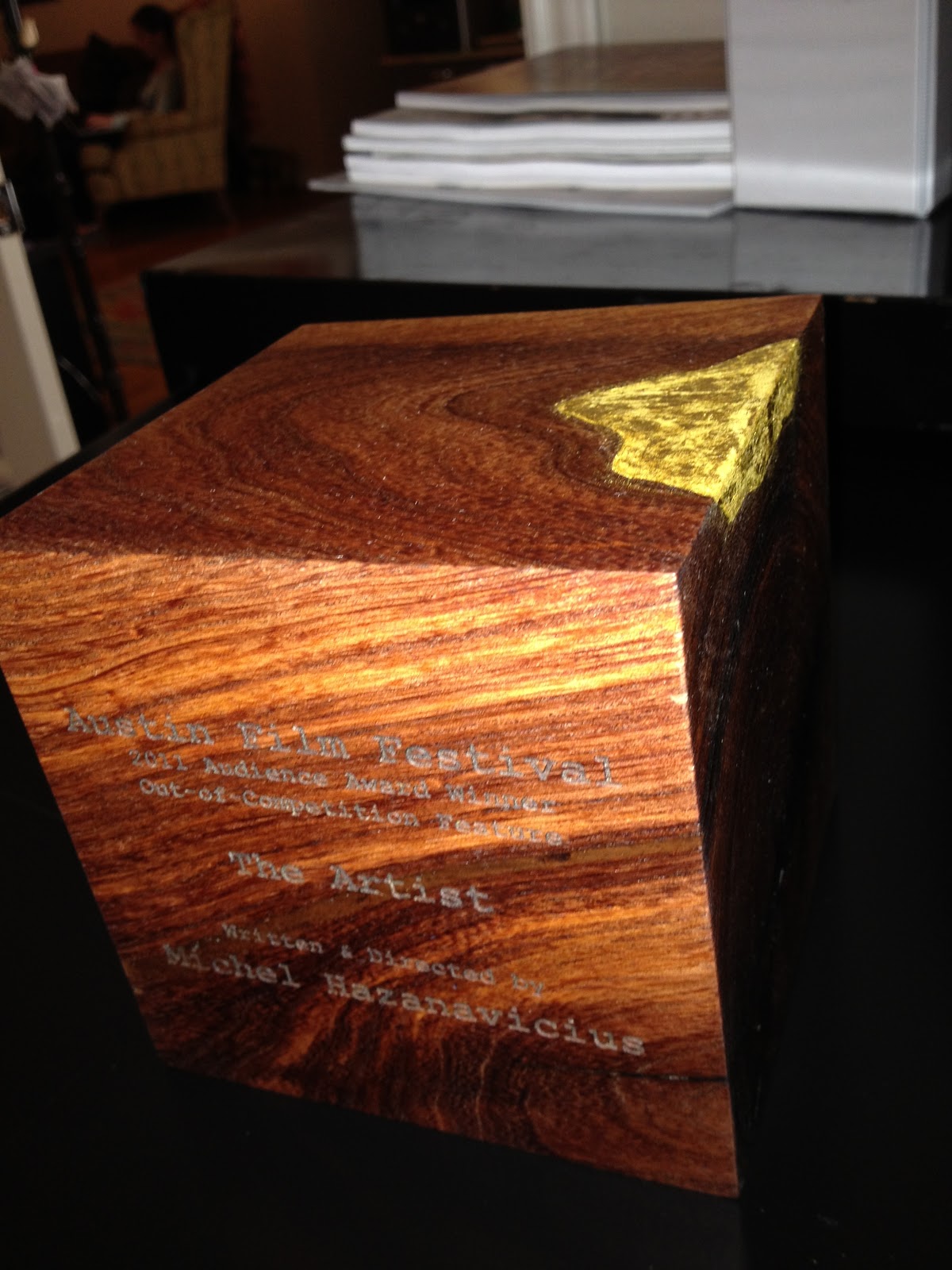
Nothing brings the staff of a film festival greater joy than seeing one of its programmed films going on to conquer the hearts and minds of moviegoers everywhere. We were also so pleased to see “The Fantastic Flying Books of Mr. Morris Lessmore,” which won both our Jury and our Audience Award for Best Animated Short, go on to win the Oscar in that category.  I can remember the day that my fellow film programmer, Stephen Belyeu, and I watched that film for the first time.  We both knew we had just seen something very special, and we were so honored to introduce it to our festival audience and the Austin moviegoing community at large.  Those are the moments that make this job so rewarding, and we can’t wait to do it all over again this October.  Here’s to another year at the movies!

Wednesday, February 15, 2012

Box Office Recovery

A few weeks ago, I wrote that 2012 might be a great year for film marketing.  So far, someone is definitely doing something right. Ticket sales have been soaring, breaking records and dragging the industry out of the minor slump that was 2011. Previously unknown directors and screenwriters have been spinning low-budget films into box office gold, establishing themselves as new voices and signing on to major new projects. But who or what is responsible for this 2012 uptick? 

It’s very difficult to say.  It’s always going to be hard to read a culture and understand why one film catches on while others fail. I stand by my argument that film marketing is becoming increasingly thoughtful and clever, doing more with less, and studios have become much smarter about targeting their efforts and marketing to the right demographics at the right time. But even these strategies won’t help sell an unsellable film, which suggests that the quality of product being released is better than usual. 

In recent years, studios have tended to dump their worst movies into theaters during January and February.  These months are essentially the “Oscar season doldrums,” when the films being considered for Academy Awards stick around in theaters as more and more people want to see what everyone is talking about.  This doesn’t leave much room in cinemas for additional thought-provoking fare, so studios counter-program with the kind of action film or romantic drama that isn’t likely to win over the critics, hoping to scrounge up a few million dollars in an empty marketplace. 

This year, it seems like studios have been mixing things up a bit, releasing films like The Grey, Safe House, and Chronicle that are as dependent on solid writing and assured direction as they are on Liam Neeson, Denzel Washington, and the superhero trend. These are films that could’ve held their own in the slightly more competitive months of March and April, yet here they are in January and February, cashing in their jackpots.  

Additionally, the studios have truly made an art out of not stepping on each other’s toes.  Generally, when two films that are similar in theme or feature the same star suddenly find themselves scheduled to open on the same Friday, one of the studios will budge and move to another date.  This ultimately is best for everyone involved, as each weekend brings a new option for different types of moviegoers without overcrowding the marketplace. There could be no better example than this past weekend, which saw four movies open with more than $20 million in ticket sales (The Vow, Safe House, Journey 2, Star Wars: Episode I 3D). This is a truly staggering testament to the benefits of studios playing it smart and counter-programming each other.  

For example, This Means War, the romantic-action-comedy starring Reese Witherspoon, Chris Pine, and Tom Hardy, abandoned its original plan to open on Valentine’s Day after realizing that it would have to directly compete with The Vow, which proved to be a wise decision. The Vow sold more tickets yesterday than any film ever has on a Valentine’s weekday. Now, This Means War can make its entrance this Friday with some of the excitement over The Vow having already died down.  If the studios continue to play it safe, and play nice, 2012 could be a particularly great year for the film industry.

- Stephen Jannise, Film Program Director

Wednesday, February 08, 2012

Should I Stay or Should I Go: The Rise of Cinema-on-Demand

As you have no doubt noticed in recent years, there are more ways than ever to experience films.  Want to watch in the comfort of your own home? You can stream on Netflix, rent from iTunes, or order Video-on-Demand from your cable provider or video game system. Prefer the old fashioned method of going to the theater? You can choose the optical trickery of 3D, the pulse rattling grandeur of IMAX, or the pure insanity of motion seats. There truly is a wealth of options for movie lovers today, with more to come in the near future. 

This also means there are more options for studios and distributors to determine how they can maximize profits on a film’s potential, leading to a debate about whether or not indie filmmakers are being given golden opportunities or the short end of the stick.  On the one hand, you can now see films in Austin, TX, through VOD or iTunes that would, in past years, have only been exhibited in a handful of theaters in New York or Los Angeles, opening more eyes to new filmmakers and fresh ideas than ever before.  

On the other hand, this means that fewer indie filmmakers will experience the exquisite feeling of screening their film in a movie theater.  As far as we have come with on-demand movies, and as comfortable as most people have become with viewing films at home, the allure of the movie theater is still not lost on a majority of filmmakers.  Playing in an actual cinema remains the ultimate dream, but the low costs and accessibility of VOD are so appealing to studios and distributors that this dream is even less likely to come true. 

Not that most filmmakers are likely to complain if a VOD deal comes knocking on their film’s door.  In this economy, an indie filmmaker with a walletful of maxed-out credit cards will be more than happy to take any opportunity to get their movie watched and their debts erased. Luckily, these opportunities abound, with Netflix, YouTube, Hulu, and others offering a multitude of channels through which a film could find an audience. 

Unfortunately, these opportunities also eliminate the risk-taking that sparked the independent film scene into vibrant life.  Would “Reservoir Dogs” have been given a chance on the big screen? Would “Sex, Lies, and Videotape” have been labeled a “small screen movie” and gone straight to iTunes?  It’s hard to say, but one thing is certain right now: if you don’t have James Cameron’s cameras or Peter Jackson’s special FX units or the Fox Searchlight/Weinstein Company/Sony Pictures Classics logos on your poster, you’re going to have a difficult time getting your film on the big screen. 

What does this mean for those of us who can appreciate the potential of VOD but ultimately still enjoy the rush of discovering indie films at the local arthouse? It means we should go, and go as often as we can.

-Stephen Jannise, AFF Film Program Director

Wednesday, January 25, 2012

Sundance Update

Stephen Jannise, Film Program Director, reports from Sundance.
Certain films are starting to pick up buzz at Sundance, sending audiences into a frenzy for tickets and distributors into bidding wars for the chance to put their name on the next “Like Crazy” or “Martha Marcy May Marlene.” But the films aren’t the only things making news. From angry Q&As to the loss of a beloved industry veteran, emotions have been running high in the past few days.

“Compliance” has enjoyed very solid word-of-mouth with the added bonus of contentious Q&As, suggesting that the film will be a surefire conversation starter. When a man claiming to be a police officer calls a local fast food restaurant and demands that the manager, Sandra, detain her young female employee, Becky, Sandra follows his orders. As the film progresses, Sandra continues to do what the man says, with horrific results for Becky.

The film examines how quickly we can bow to authority and how dangerous it can be to do so without question. “Compliance” is tense and terrifying, and after its world premiere, some audience members who felt that the film had gone too far loudly voiced their opinions. One filmgoer took offense to the violence against women depicted in the film, arguing that it was too exploitative, and the argument is certainly valid. This film is anything but tame and conservative, and it will surely elicit strong responses from its audience, whether positive or negative. Craig Zobel directs, and Ann Dowd, Dreama Walker and Pat Healy star.
 
Spike Lee was in town for the premiere of his new film “Red Hook Summer,” and his Q&A was also somewhat contentious. The film itself has received mixed reviews, but, as a fan of Lee’s films, I enjoyed it and think other fans of the director’s work will, too. You’ll find the unmistakable writing and visual style that has been the strength of his past films, particularly since the film is a sequel of sorts to “Do the Right Thing.” But don’t tell Lee that.
Using words that can’t be printed here, Lee asserted that the film is absolutely not a sequel and went on to claim that major studios “know nothing about black people.” As usual with Lee, the spectacle of his rant has overshadowed the fact that he has some good points. Lee is a filmmaker who puts a lot of thought and heart into his films, and it doesn’t seem so crazy that he would want his latest film to stand on its own merits, rather than being aggressively marketed as “Do the Right Thing 2.”

Lee’s dissatisfaction with the studio experience underlined the importance of indie film champions like Bingham Ray, who passed away early Monday morning. The independent film community has profited from Ray’s ambition and foresight for years; he played a significant role in the careers of indie masters like Mike Leigh, Lars von Trier, David Lynch and Jim Jarmusch. It is clear, based on the mood in industry parties, that he will be greatly missed, even by those who never got to know the generous and genuine man that he was.
 
Strong emotions were also felt at the screenings for two films that depict families struggling to cope when a loved one is sentenced to several years in prison. “Middle of Nowhere” follows a young woman with remarkable patience who finds herself waiting for five years for her drug-dealing husband to be released. Director Ava DuVernay wrote the screenplay after having conversations with several women dealing with an incarcerated spouse or partner, and she drew memorable performances from her lead Emayatzy Corinealdi, Lorraine Toussaint as a mother concerned that her daughter is throwing her life away, and the unceasingly charming David Oyelowo as a man who offers our heroine a second chance.
DuVernay is a talent to keep an eye on, as is Gina Rodriguez, who portrays the title character in the pulsating “Filly Brown.” This is an astonishing, star-making turn for Rodriguez, who plays an aspiring hip-hop artist trying to make the money she needs to bail her addict mom out of prison. The actress not only handles a very difficult role with aplomb, but she is also an incredible musician, leading several people in the audience to beg for the soundtrack. With great supporting performances from Lou Diamond Phillips, Edward James Olmos and the rest of this amazing cast, the film is so much more than an “8 Mile for Girls.” 

After the screening, “Filly Brown” received a standing ovation from the 1,000 people filling Sundance’s largest venue, which brought Rodriguez to tears. She took a bow and thanked everyone in the theater for sharing in the realization of her indie dream. At that moment, I couldn’t help but think about Bingham Ray. Those are the kind of moments that people like Ray spend their lives fighting for. We have lost another fighter.
For all of Jannise's Sundance reports, visit Austin 360's movie blog!

Wednesday, January 18, 2012

Why the Awards Season Really Does Matter

The cinematic juggernaut that is The Artist continued steamrolling toward the Best Picture Oscar with several wins at the Golden Globes this past Sunday. Not too shabby for a black-and-white silent film from France that initially scared away several distributors before being picked up by The Weinstein Company. Anyone who has seen the film would say that these awards have been justly earned based on the film’s quality, and they would be correct. The Artist is an absolute delight. However, that doesn’t stop industry cynics from crediting this silent film’s accolades to one of the most aggressive campaigners in the history of awards, Harvey Weinstein, who is anything but silent.

The validity of film awards has increasingly come under question over the years, and the lengths to which awards campaigners will go to win awards for their films are the stuff of legend. Listen to rumors and hearsay, and you’d think that Weinstein stops just shy of threatening murder to get his films the recognition they deserve, which leads many to believe that these awards are meritless and unimportant. But I’d like to take this opportunity to make a bold statement: They’re wrong.

Ask any filmmaker or production studio, “Who do you want in your corner come Oscar season?” and you’ll more than likely hear them say Harvey Weinstein’s name. That’s because they recognize how important these awards truly are. The value of having “Academy Award Winner” stamped on a DVD cover is immeasurable; in fact, it is almost required if an independent or foreign film hopes to sell any copies at the local Target. That’s because, for the average moviegoer, the Oscars provide a quick summary of the best (well, one version of the best) films in a given year, films that an average moviegoer may not have had access to in their local movie theater.

I can speak to this issue from a personal angle. As a young film lover growing up in small-town Texas, my first chance at seeing a film like The Artist would’ve been home video. Films that run for weeks in LA or NYC cinemas never make it as far as Southeast Texas, so I used award nominations and critics lists as a guide to what I should look for at my local movie rental. Although the circumstances have changed a bit (rentals have given way to iTunes and Netflix), the basic facts are still the same: many great films don’t reach a broader audience until after they leave the cinema. That’s why these films need the awards season, and that’s why we need it, too.

-- Stephen Jannise, Film Program Director